Six Fundamentals of Building an Inclusive Learning Community

Are you hoping for a better, more equitable future? Are you ready to take steps today that will help your current students? While the topic is complex, clarifying key terms and revisiting these six basics of inclusive learning communities—each coupled with specific, inquiry-based learning practices—can turn our aspirations into opportunities.
Providing a more just and effective education for all students requires concrete actions that begin with attention to these questions:
What does it mean to build an inclusive learning community?
What are some fundamentals that are critical to inclusion across the curriculum and for all age groups?
1. Awareness
Educators must know that with their own awareness of their words and actions, they are building a community. By doing so even more mindfully and intentionally, they will enhance the myriad benefits an inclusive community offers for all learners.¹ These benefits, both academic and social-emotional, increase the likelihood of the “long-term flourishing,” as teacher-author Dave Stuart puts it, of individuals and societies.²
Awareness and self-reflection often involve clarifying language: what does it mean to be “inclusive”? The narrowest definition in K-12 education is historically linked to special education, particularly for students with physical, intellectual, and developmental disabilities. While full inclusion may not work for every child, as most educators know, when students receive education in the least restrictive environment, “research shows that they are more successful academically and socially.”³
Over time, the concept of inclusion has broadened to recognize a range of other student needs—linguistic and cultural responsiveness; neurodiversity; and racial, gender and economic trauma and inequality—as well as awareness that individual students can be “twice or thrice exceptional,” thus affected by more than just one variable. Eventually, in its most expanded sense, inclusion honors the varied ways in which we all learn, at times differently than how others learn, or from some presumed “norm.”
2. Feeling Safe
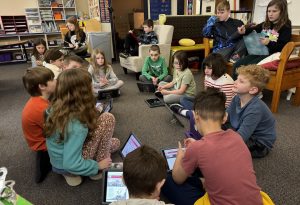
A true fundamental of an inclusive learning community is ensuring learners feel safe, including being able to openly discuss what matters to them. Beyond physical safety, our instructional choices and expectations can help build emotional safety in our classrooms, contributing to risk-taking and growth mindsets. “Educators can promote inclusivity by creating environments where students can openly discuss thoughts and feelings about privilege and structural oppression,” as Alexis Anderson notes.⁴ But most students need to learn how to have civil, respectful, effective discussions of complex subjects. When students engage in Shared Inquiry™ across the curriculum, they not only understand content better, they also gradually learn the lifelong skill of how to learn from others, recognizing everyone’s need to feel safe.
Hear Kimberly Gow describe the benefits of discussing fun stories in a safe environment.
3. Belonging
Knowing that your presence matters, that you are a key part of the group, is a third fundamental of inclusive learning communities. Teachers in inquiry learning start with the expectation that no one has all the answers—especially when we’re thinking about complex content that raises essential questions that everyone cares about. Then, by using skillful open questioning, teachers model curiosity and interest in the reactions, questions, ideas, and perspectives of everyone. They regularly look for opportunities to help all students see how much everyone’s contributions helped the group go deeper and understand something better.
At each step in the Shared Inquiry Sequence of Activities, all students are asked to share experiences, questions, observations, and ideas. The expectation is always that these responses will vary, and that variance is normal and beneficial—and that by learning together, we all learn more.
4. Esteem
Esteem builds on belonging, and is a fourth fundamental educators can cultivate to create more inclusive classrooms. Learners want to gain the attention and earn the respect of their peers, which collaborative learning can provide. They seek positive reinforcement and recognition.
By providing students with anchor charts, question stems, and sentence starters, teachers help them learn how to share their ideas so that those ideas can be heard and responded to by others. And when teachers follow the Five Guidelines for Shared Inquiry Discussion and shift from using praise to asking follow-up questions, they help students shift from being extrinsically motivated to the more intrinsic awareness that their ideas have worth based on evidence and reasoning, leading to authentic self-esteem.

5. & 6. Learner Voice and Agency
The fifth and sixth fundamentals of Learner Voice and Agency are intertwined, and are often seen as long-term goals that most students may or may not be able to achieve, especially within the constraints of current educational practice. Educators may talk about giving students voice and agency, but not have practical ways to do that on a regular basis.
But Shared Inquiry learning enables teachers to gradually release responsibility for key elements of learning to all students in ways that honor the diversity of their needs and experiences. With experience and guidance, students can take on appropriate pieces of learning, but don’t have to already know how to learn independently or be able to sustain the full effort without support.
Calls for equity and educational excellence for all learners that lead to more inclusive and thus more effective communities of learners build on these fundamentals in countless ways — across academic, nonacademic, and extracurricular dimensions. As part of this rich mix, Great Books programs and Shared Inquiry learning add transferable value and meaning by enacting inclusion as an essential, core component of the curriculum.

Download Release of Responsibility charts for grades 3–5 or grades 6–8 to see how your role as a facilitator shifts as your students gain proficiency in Shared Inquiry and assume greater responsibility for their learning.
Make Your Classrooms More Inclusive Through Shared Inquiry!
From now until February 28, 2025, we are offering 15–20% off all Great Books professional development in inquiry-based learning. When teachers welcome the input of all children in Junior Great Books, students gain transferable lifelong learning skills while teachers create vibrant classroom communities. The facilitation skills teachers gain through learning Shared Inquiry are valuable not only for leading great discussions—they are also highly transferable across the curriculum. Contact your Great Books partnership manager today to schedule:
- Introductory training
- Advanced courses
- Custom consultation
- Your own tailored professional development package
Set up a brief meeting today to take advantage of this opportunity!
Research links
- Wells, Amy Stuart, et al., “How Racially Diverse Schools and Classrooms Can Benefit All Students.” The Century Foundation, February 9, 2016.
- Stuart, Jr., Dave. “Our One Enduring Standard (and its Two Components).” September 6, 2016.
- Bowen, Janine. “Ask the Expert: What is Inclusive Education? A Beneficial Way to Teach Students of All Abilities Side-by-Side, Says Assistant Professor Jamie Pearson.” NC State University College of Education News, March 11, 2020.
- Anderson, Alexis. “7 Ways to Create an Inclusive Classroom Environment.” ASCD. January 18, 2018.

Senior Academic Consultant
Denise Ahlquist has enjoyed leading thousands of Shared Inquiry discussions with participants ranging from ages 4 to 99, across the United States and abroad. A veteran educator and “road warrior,” she has introduced thousands of other teachers and learners to the Shared Inquiry method and supported them in a wide variety of K–12 environments.